> For the complete documentation index, see [llms.txt](https://docs.bscs.finance/llms.txt). Markdown versions of documentation pages are available by appending `.md` to page URLs; this page is available as [Markdown](https://docs.bscs.finance/defi-2/dex-tools/market-maker/lock-liquidity.md).
# Lock Liquidity
### **Safeguarding Assets in the World of DeFi**
Welcome to decentralized finance (DeFi), where innovation and security intersect. In this landscape, one crucial element stands out: Lock Liquidity. This concept secures assets and paves the way for trust and stability in decentralized ecosystems.
### **What Is Lock Liquidity?**
Lock Liquidity is a foundational pillar of the DeFi ecosystem. It refers to securing and safeguarding assets within smart contracts for a specified period. This locking mechanism enhances the trustworthiness of projects, stabilizes token prices, and fosters confidence among users and investors.
### **Key Features of Lock Liquidity:**
#### **1. Security and Trust:**
* **Asset Protection:** Locking liquidity safeguards assets, preventing sudden price fluctuations and ensuring that project funds remain secure.
* **Trust Building:** Projects implementing lock liquidity mechanisms instill trust and confidence in their communities, attracting users and investors.
#### **2. Price Stability:**
* **Reducing Volatility:** Lock Liquidity helps mitigate wild price swings often associated with low-liquidity tokens, making the ecosystem more stable.
* **Positive User Experience:** Users benefit from predictable token values and reduced risk of impermanent loss.
#### **3. Project Sustainability:**
* **Long-Term Viability:** Lock Liquidity often signifies a project's commitment to long-term success, as it demonstrates the dedication to maintaining healthy liquidity pools.
* **Community Growth:** Stable and secure projects attract and retain a loyal community.
#### **4. Smart Contract Functionality:**
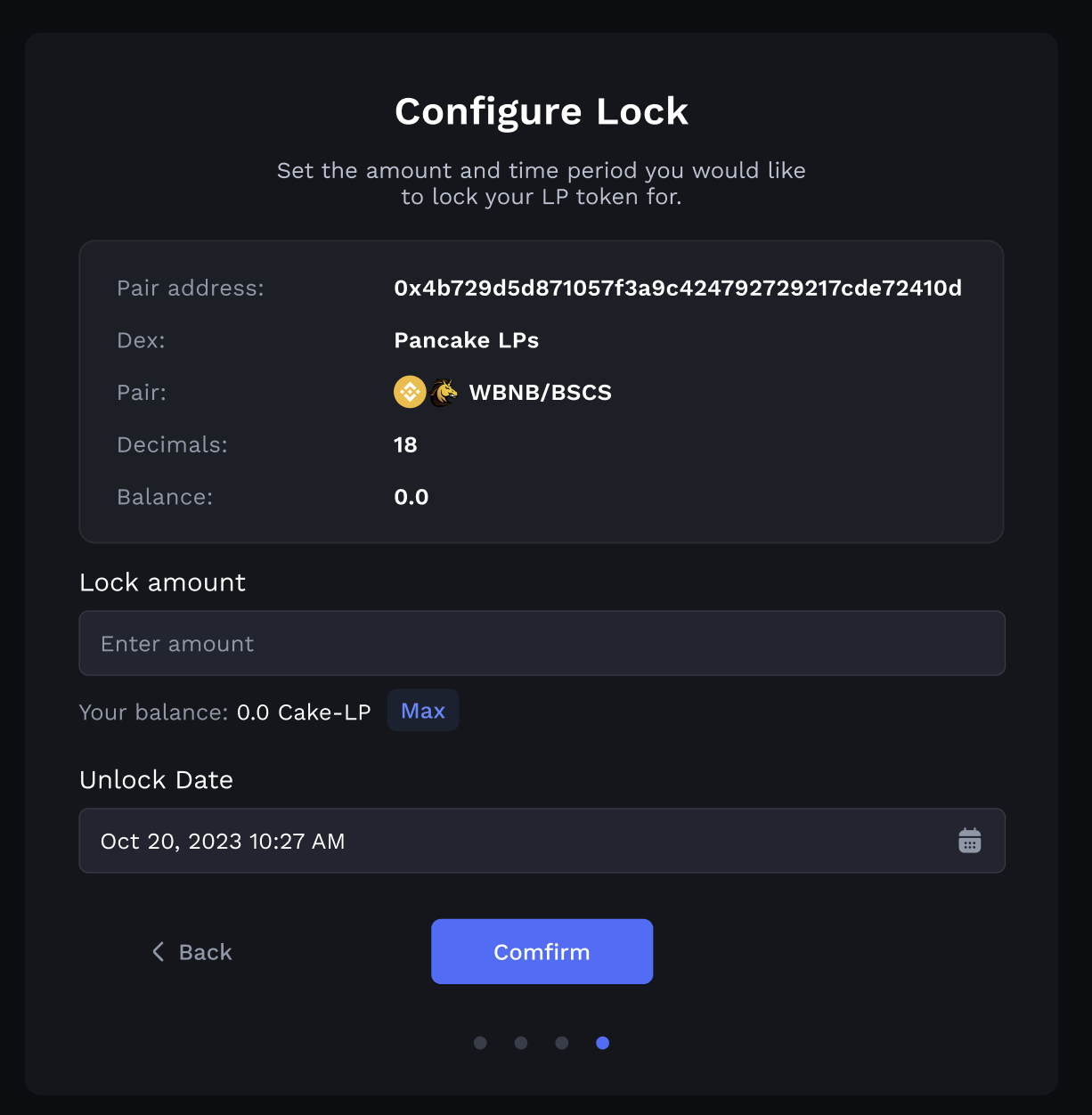
* **Customizable Locks:** Lock Liquidity mechanisms are often customizable, allowing project creators to define lock periods and conditions according to their project's requirements.
* **Transparency:** Lock Liquidity is typically transparent, with smart contracts providing clear rules and timelines for asset release.
### **Why Choose Lock Liquidity?**
* **Asset Protection:** Ensure the safety of your assets and project funds by securing them within smart contracts.
* **Price Stability:** Promote stable token prices, reducing uncertainty and volatility.
* **Trust and Confidence:** Build trust within your community, attracting users, investors, and stakeholders.
* **Long-Term Sustainability:** Lock Liquidity contributes to your project's long-term sustainability and success.
* **Transparency:** The transparency of lock liquidity mechanisms fosters transparency and accountability.